Will anyone notice? The truth about undetectability
It is the first question almost everyone asks, and they deserve an honest answer — not a slogan. Here is exactly why a well-made system disappears, and what actually gives the cheap ones away.
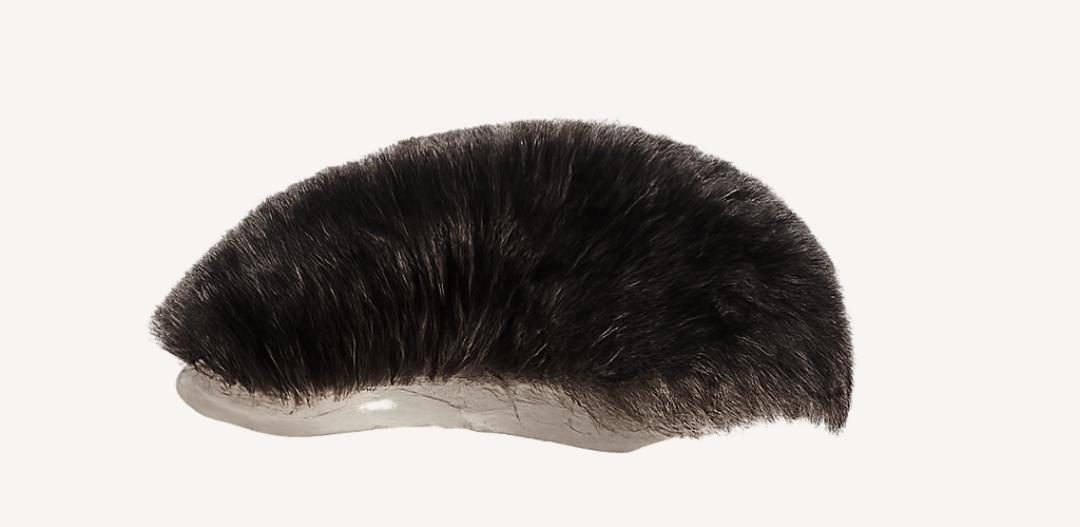
Before anyone talks to us about cost, or care, or how long a system lasts, they ask the real question, usually a little nervously: will people be able to tell? It is the fear that sits underneath everything else. So we are going to answer it the way we wish more of the industry would — honestly, including the parts where bad work does get noticed and why.
The short version is this: a properly made, properly fitted system is undetectable in normal life, and stands up to far closer scrutiny than people expect. The longer version is worth understanding, because it explains the difference between something nobody clocks and something everyone quietly does.
Why a good system disappears
Detectability comes down to three things: the hairline, the hair, and the fit. Get all three right and there is simply nothing for the eye to catch.
- The hairline. This is where systems are made or broken. At the front we use ultra-fine lace or silk — the hair is hand-knotted into a base so sheer that, against your skin, it reads as hair growing straight out of your scalp. There is no ridge, no line, no obvious edge.
- The hair. It is real human hair, so it catches the light, moves and behaves exactly like the hair around it. Synthetic shine is one of the first things that betrays a cheap piece; real hair simply doesn’t do it.
- The fit. We cut the system into your existing hairline and to your face, rather than fitting a generic shape. A cut that belongs to you is the difference between a haircut and a hairpiece.
The close-up test
People imagine the danger zone is someone standing right in front of them in good light. In practice, that is exactly where a good system holds up best, because the front hairline — the part under the most scrutiny — is the part we build with the finest materials. The knots are tiny, the base is translucent, and the hair emerges at the right angle and density.
Could a trained eye, looking deliberately and from inches away, tell? Possibly — we believe in being honest about that. But no one in your actual life conducts a forensic examination of your hairline. They see a face, hair, and a general impression of “well.” That is the test that matters, and good work passes it comfortably.
The eye is looking for an edge, a shine, a line that doesn’t belong. Remove all three and there is nothing left to notice.
Photos, flash and bright light
Harsh light and camera flash are where lesser systems get exposed — a too-dense front, an unnaturally straight hairline, or a base that catches the light wrong. The defence is the same as it is in person: a soft, slightly irregular hairline like a real one, sensible density at the front, and a fine base that doesn’t reflect. Built that way, a system photographs as hair, flash and all.
Wind, rain and the pool
The honest worry behind “will anyone notice” is often really “will it betray me at the worst moment” — a gust of wind, a downpour, climbing out of a pool. Because our systems are bonded and made with a breathable base and real hair, they behave like hair in all of it. Wind moves it; it doesn’t lift it. Rain wets it; it doesn’t reveal it. You can swim and surface without a second thought. If you want the day-by-day reality of living with that confidence, our piece on your first week with a hair system walks through it.
What actually gives cheap pieces away
It is fair to ask why some hairpieces are obvious. Almost always it is one of these, and each is avoidable:
- A hard, ruler-straight front hairline that no real head ever had.
- Too much density at the very front, where natural hair is actually finest.
- Synthetic hair with a plastic sheen under light.
- A thick or shiny base that shows at the parting or edge.
- A generic shape that was never cut to the wearer’s own face.
How we avoid them is not a secret — it is just craft. Fine lace and silk at the hairline, real hand-knotted human hair, sensible front density, a translucent breathable base, and a cut shaped to you in a single appointment. The standards behind that work are set out in our services, and the people who do it — founder Gaz Atwal and the studio team — on our team page.
In short
- Undetectability comes down to three things: the hairline, real human hair, and a cut made for you.
- Fine lace or silk at the front means no edge, no line and no shine — even up close and in photos.
- The tells of cheap pieces — hard hairlines, synthetic shine, thick bases — are exactly what good craft removes.
The honest answer
So, will anyone notice? In the life you actually lead — at work, at the gym, at dinner, in the rain — no. People notice that you look like yourself, and a little better. If you have more questions, our FAQ answers the ones we hear most, and the best reassurance of all is simply seeing one in person.
See it for yourself
The honest answer lands best up close. Book a free consultation and judge the undetectability with your own eyes — no pressure, no obligation.
Book a free consultation