Hair system vs hair fibres & concealer sprays
One is a same-day cosmetic touch-up you reapply every morning. The other is real hair, bonded on, that's there when you wake up. Here's an honest look at what each actually does — and when fibres are genuinely the right call.
If you've spent any time looking into thinning hair, you've probably seen the little bottles — hair-building fibres, root concealer sprays, coloured powders that promise a fuller head in seconds. They're everywhere because they're cheap, easy to try, and genuinely do something. What they don't do is fix the actual problem, and most of the marketing around them quietly skips that part.
We fit hair systems, so you should know where we sit. But fibres aren't a scam and they're not a lesser choice for everyone — for the right situation they're a sensible, low-commitment option. This is a straight comparison of what each one is, not a pitch for our side of it.
What each option actually is
Hair-building fibres are tiny coloured filaments, usually keratin or plant-based, that you shake onto thinning areas. Static electricity makes them cling to your existing strands and the scalp, thickening the visual density and covering the gaps where scalp shows through. Concealer sprays work on the same principle with pigment instead of fibres — both are camouflage, applied fresh each time you want the effect.
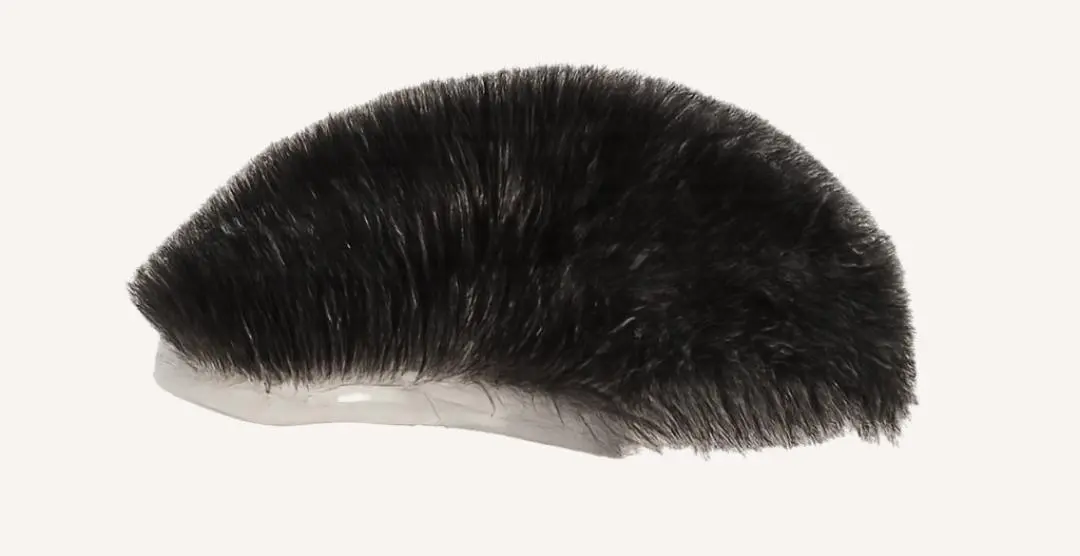
A hair system is a different category entirely. It's a fine, breathable base hand-knotted with real human hair, bonded to your scalp and cut into your own hairline. It isn't reapplied daily — it's fitted, worn continuously between maintenance visits, and it's there when you wake up, get caught in the rain, or go for a swim.
In short
- Fibres are instant, cheap per use, and reapplied every day — they camouflage thinning hair, they don't replace it.
- A system is a one-off fit that gives you a full head of hair continuously, with a real cost and a maintenance rhythm.
- Fibres need existing hair to cling to; a system works at any stage, including fully bald.
How they hold up in real life
This is where fibres show their limits. They're genuinely convincing in a still photo or across a room, but they don't survive contact with water, sweat or friction — rain, a humid gym session, swimming, or even leaning your head back against a pale pillow or collar can shift or transfer them. Plenty of daily users get used to touching up mid-afternoon or avoiding certain situations altogether. It's a manageable routine, but it is a routine.
A hair system isn't affected by any of that in the same way. It's bonded to stay on through washing, sweating, sleeping and swimming, and it's cut and styled like real hair because, above the base, it is real hair. There's more on what that's actually like day to day in your first week with a hair system.
Fibres camouflage the problem for a few hours at a time. A system replaces what's missing, continuously.
Coverage — what each can actually fix
Fibres rely on static cling to existing strands, so they only work where you still have hair, even if it's fine and thinning. On an area that's fully bald, or close to it, there's nothing for them to hold onto and the effect largely disappears. That's a hard ceiling on how much density they can realistically add.
A hair system has no such ceiling. Because the hair is added on a base rather than relying on what's already there, it looks the same whether the area is lightly thinning or completely bald. If you're trying to work out where you currently sit, our piece on why hair loss happens walks through the stages in plain terms.
Cost, compared over time
Fibres are cheap to try and cheap per application, which is exactly why so many people start there. The catch is that the cost never stops — every bottle runs out, every reapplication is a small repeat cost, and years of that add up to a real sum with nothing to show for it if you ever stop buying it.
A hair system is the opposite shape of spend: a considered cost upfront rather than a trickle forever. Ours are £495, with maintenance visits around every four to six weeks from £60, or a monthly plan from £300 to start plus £85 a month across a twelve-month term. We set the full numbers out honestly, without vague "affordable" language, in what a hair system actually costs.
Confidence and the close-up test
Fibres are built for distance and photos — at conversational range, in good light, or if someone runs a hand through your hair, the illusion tends to break down quickly. A well-fitted, well-maintained hair system is designed to survive exactly that closer scrutiny, because it isn't an optical trick, it's real hair on a base cut into your hairline. Our guide to whether anyone will notice goes into what actually gives a piece away versus what makes it disappear.
Can you use both?
In a sense, yes — plenty of people use fibres as a genuinely sensible stopgap while they decide what to do longer-term, or for the occasional event where a system isn't yet an option. That's a completely reasonable way to buy yourself time. What doesn't tend to work well is using fibres on top of a hair system — the system's own hair already gives you the density fibres are trying to fake, so there's rarely a need.
So which is right?
If your loss is mild, you only need a touch-up occasionally, or you want to try something with zero commitment while you think things over, fibres are a sensible, low-risk starting point — and there's no shame in reaching for them first. If you're reapplying most days, your loss has moved past what fibres can realistically cover, or you're tired of planning your day around rain and sweat, a hair system is worth a proper look.
A free consultation is a low-pressure way to see where you stand — including an honest opinion on whether you're actually at the point where a system makes more sense than what you're currently using. If you want a lighter starting point first, our two-minute quiz points you toward which base and route are likely to suit you.
See what actually fits you
Book a free, no-obligation consultation and we'll give you a straight opinion on your options — no pressure, no upsell.
Book a free consultation