Density and texture: the two details that make or break the look.
A hair system rarely looks fake because of the base — it looks fake because the density or the texture doesn't match what was actually there. Here's what those two words mean, and how getting them right is what a proper consultation is for.
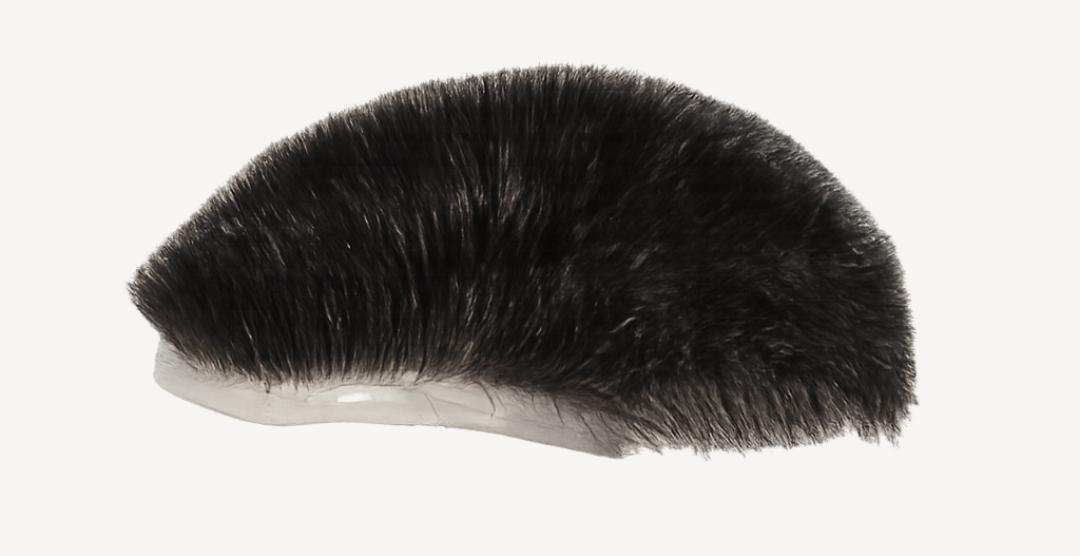
Most men researching a hair system have seen a bad one without realising it — a hairline that's too neat, hair that sits a little too full and a little too flat, a texture that doesn't quite move the way the rest of the head does. It's rarely the base material that gives it away. It's almost always one of two things: the density is wrong, or the texture is wrong. Both are decisions made at consultation, not defaults built into the product.
What density actually means
Density is simply how many individual hairs are knotted into a given area of the base, set against what your own hair looked like at its fullest. It sounds like a "more is better" number, but it isn't treated that way here. Real hair is never uniformly thick across the whole head — it's finest at the hairline and temples, and fuller further back and at the crown. A system built to a single high density everywhere is one of the most common causes of an obviously artificial result, because no one's real hair actually grows like that. The craft is in matching the density you had, not maximising the density you could technically fit.
What texture actually means
Texture is the shape the hair grows in — straight, wavy or curly — and how tightly it curls or waves. It matters just as much as colour, because hair with the wrong texture behaves differently to the hair around it. A straight system on someone with a natural wave will start to separate from your own hair once it's damp, styled, or caught in humid weather, creating a visible join where a colour-matched but texture-mismatched piece meets your real hair. Matching texture is what makes the two blend as one head of hair rather than two different ones sitting side by side.
How it's actually matched
Both are assessed at your free consultation, alongside colour and grey distribution. We look at what's left of your own hair — at the sides, back and anywhere loss hasn't reached yet — and use that as the reference point, not a generic "full head" template. Real human hair is then selected and hand-knotted to that specification, strand by strand, rather than picked off a shelf at a fixed density and texture. It's the same free consultation covered in what a hair system actually is, and the same specification process used for colour and grey matching — density, texture and colour are all measured together, not as separate add-ons.
The goal isn't the fullest possible head of hair — it's the one that looks like it was always going to be there.
Why less is often more natural
It's a common instinct to want the density turned up as far as it will go, especially for anyone who's spent years watching their hair thin. But a lower, better-matched density at the front and a natural taper toward the hairline is what real hair does, and it's what a trained eye reads as genuine. Our article on whether anyone will notice covers this from the detectability side — sensible density at the front is one of the specific things that separates a convincing result from an obvious one.
What this doesn't change
Density and texture matching is part of every fitting at all three tiers, not an upgrade or an add-on. It doesn't change which base you're quoted for, and it's confirmed in writing before anything is made, alongside colour. If your own hair's texture or thickness genuinely changes over time, that's exactly what a maintenance visit is for — the same way colour drift is handled as you keep going grey.
In short
- Density is how full the system is knotted, matched to what your own hair actually looked like — not maximised for thickness.
- Texture is the wave or curl pattern; mismatched texture is what causes a visible line between a system and real hair, especially when damp.
- Both are measured at your free consultation alongside colour, and hand-knotted to that specification — not picked from a fixed shelf option.
- A lower, well-matched density at the hairline usually looks more natural than the fullest technically possible result.
If you're still deciding whether a system is right for you at all, what a hair system actually is is a good starting point. Curious what a proper fitting process actually involves end to end? Our complete guide to hair systems walks through the whole journey.
See your own match, in person
A free consultation is the only way to see how your density and texture would actually be matched — no obligation, no pressure.
Book a free consultation