Hair system vs minoxidil and finasteride
Two genuinely different answers to hair loss: one tries to change what your follicles do over many months, the other changes what you see today. Here's an honest, sourced comparison — not a reason to skip your GP.
This is a question we get asked at almost every consultation, usually from someone who has already tried the medication route, or is weighing it up against a system before starting either. It deserves a straight answer, and because it touches on prescription and pharmacy medication rather than just another styling option, it deserves one grounded in real clinical guidance rather than forum opinion. So this piece leans on the NHS and the British Association of Dermatologists (BAD) — the same primary sources a GP would point you to — rather than on what we've heard secondhand.
Before anything else: we are not doctors, and nothing here is a substitute for talking to your GP or pharmacist about whether minoxidil or finasteride is right for you. We fit non-surgical hair systems, not medication, and we'd rather send you to the right source for that decision than guess at it ourselves.
What minoxidil and finasteride actually are
The NHS is direct about this: "Finasteride and minoxidil are the main treatments for male pattern baldness." Minoxidil is a topical liquid or foam applied to the scalp; the BAD's patient information leaflet on male pattern hair loss describes 5% minoxidil as something that "may help to slow down the progression of hair loss and acts as a hair growth stimulant." It isn't available on an NHS prescription. Finasteride is a tablet, taken orally, which the BAD describes as reducing "levels of dihydrotestosterone (hormone), which may slow hair loss and possibly help regrowth of hair." Both are attempts to change the biology of hair loss from within — not a way of adding hair that isn't there.
In short
- Minoxidil and finasteride try to slow or partially reverse loss over many months — they don't work for everyone, and per the NHS, "no treatment is 100% effective."
- A hair system gives a full result the same day, regardless of how loss is progressing underneath.
- The two aren't mutually exclusive — many people use medication and a system together, or move between them.
How long each takes to show anything
This is where the contrast is starkest. Per BAD guidance, minoxidil "needs to be used for at least 6 months and possibly up to 12 months before any benefit may be noted" — and there's an unpleasant early phase to get through first: "minoxidil solution may cause an initial hair fall in the first 4-6 weeks of treatment before subsiding," which the leaflet explains is shedding of hair that had already reached the end of its cycle being replaced by new growth, not a sign the treatment is failing. Finasteride is a longer wait again: "continuous use for up to 14 months can be required before a benefit is usually seen."
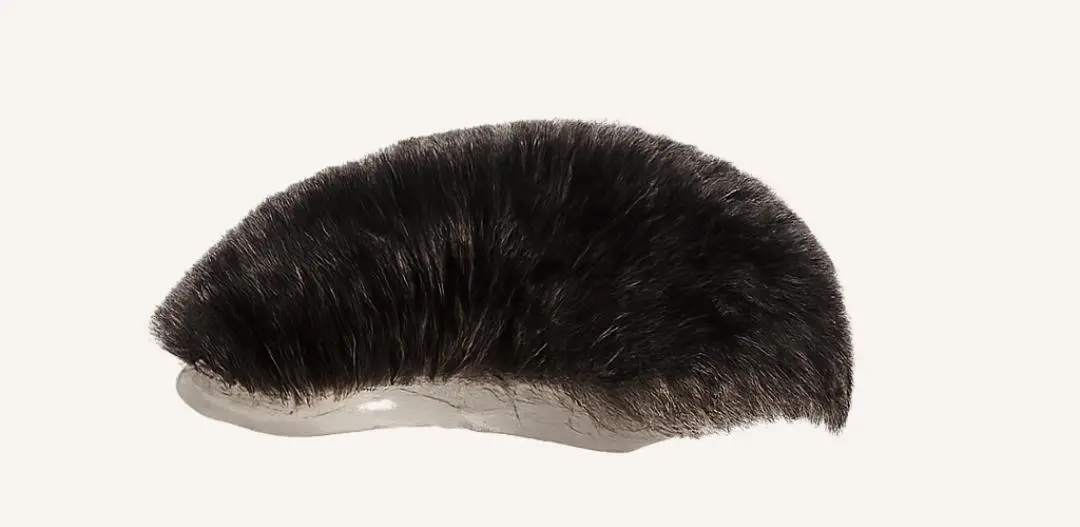
A hair system works on a completely different timescale. You arrive with visible thinning or baldness and leave the same appointment with a full, styled head of hair. There's no waiting to find out whether it's worked, because it isn't trying to change your biology — it's an immediate, physical answer rather than a slow biological one. Our guide to what a hair system actually is covers how that works in practice.
Side effects and what the guidance actually says
Neither medication is risk-free, and the BAD leaflet is specific about both. Minoxidil "can cause skin reactions such as dryness, redness, scaling and/or itchiness at the site of application and should not be applied if there are cuts or open wounds." Finasteride carries a more widely discussed side-effect profile: "decreased libido and erectile problems are recognised side-effects in approximately 2% of patients taking this treatment" — a real but, per that same guidance, an uncommon outcome, not something to dismiss or exaggerate.
A hair system carries no medication side effects at all, for the simple reason that nothing is taken or absorbed — it's a physical, non-surgical piece bonded to the scalp, not a substance that acts on your body. That's a genuine practical advantage for anyone who would rather avoid systemic side effects altogether, or who has already found one or both medications don't agree with them. It isn't a reason to avoid discussing medication with a GP if it might otherwise help you — only a different trade-off to weigh.
What happens if you stop
Both medications ask for a long-term commitment, and the NHS is plain about the catch: these treatments "only work for as long as they're used." The BAD's leaflet is more specific still for finasteride — "the benefits can reduce over time and the process of hair loss restarts after discontinuing therapy." In other words, neither is a one-off fix; both require the treatment to continue indefinitely for any benefit to be maintained.
A hair system doesn't carry that dependency. Continued natural hair loss underneath the system doesn't change how it fits or how it looks, because the base is doing the work regardless of what's left beneath it — the same reason a system suits any stage of loss. There's nothing to keep taking to preserve the result; the commitment is a maintenance rhythm, not an ongoing course of treatment. Our piece on caring for a hair system sets out what that rhythm actually involves.
Cost, honestly
The NHS notes plainly that minoxidil and finasteride "are not all available on the NHS, so can be expensive if you have to pay" for an ongoing private prescription or pharmacy purchase — and because both need to be used indefinitely to keep any benefit, that's a recurring cost with no natural end point. We don't carry pricing for medication and won't guess at a figure; that's a conversation for a pharmacist or GP. What we can be precise about is our own pricing: hair systems are £495, with maintenance around £60 every four to six weeks, or a monthly plan from £300 to begin plus £85 a month. The full breakdown is in what a hair system actually costs.
Can you do both?
Yes, and it's a genuinely common combination rather than a contradiction. Some clients continue a prescribed treatment underneath their system, hoping it slows loss in the areas the system doesn't need to cover, or simply because their GP has them on a plan already. Others stop medication once they've decided a system is their long-term answer and the ongoing routine no longer feels worth it to them. Either is a reasonable choice — the two approaches solve different problems (visible result today vs. a slow attempt to change the underlying process) and don't interfere with each other mechanically.
So which is right?
If you'd rather try to slow or partially reverse loss from within, are comfortable with a many-month wait for any benefit, and are willing to discuss the real side-effect profile with a GP or pharmacist, minoxidil or finasteride may be worth exploring — that conversation belongs with a medical professional, not with us. If you want your hair back now, at any stage of loss, without medication or its side effects, a hair system is built for exactly that. Plenty of people do genuinely benefit from combining the two.
A free consultation is a good place to talk through the system side of that decision honestly — including how it sits alongside anything you're already taking or considering. If you want a lighter starting point first, our two-minute quiz points you toward which base and route are likely to suit you.
References
- NHS — Hair loss · nhs.uk/conditions/hair-loss/
- British Association of Dermatologists — Hair loss male pattern (androgenetic alopecia) · bad.org.uk
Talk it through, honestly
Book a free, no-obligation consultation and we'll talk you through what a hair system involves — including how it sits alongside any medication route you're already on or considering.
Book a free consultation