Male pattern baldness, explained plainly
If a GP, a dermatologist or a hair clinic has already used this exact term with you, here's the plain-English version: the genetics behind it, how to find your stage, an honest look at a medication option rarely mentioned, and what actually helps.
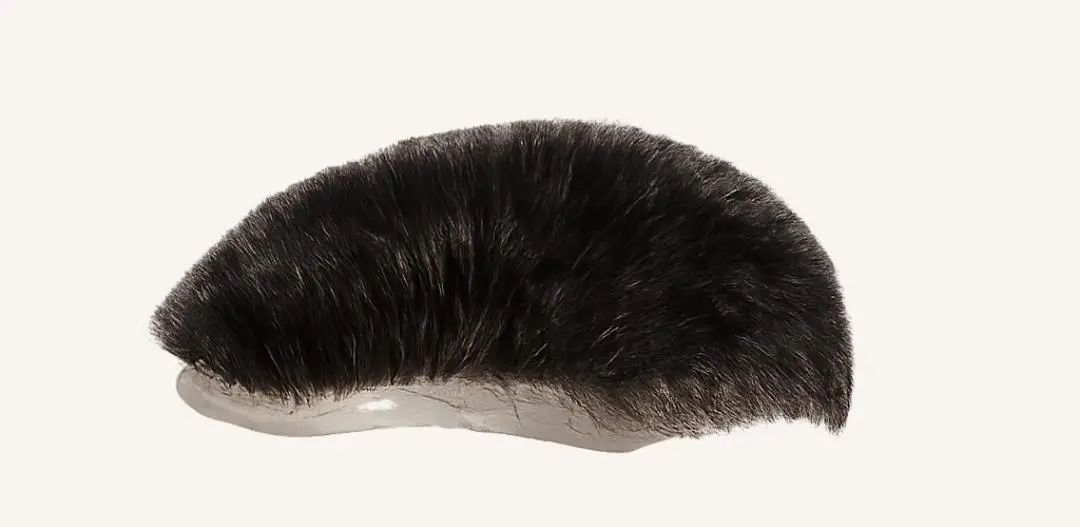
"Male pattern baldness" is the term almost everyone actually types into a search bar — far more than its clinical name. This piece leans on the British Association of Dermatologists' own patient leaflet rather than forum opinion, and goes a little further into two things that leaflet covers but rarely get mentioned online: a second DHT-blocking medication most people haven't heard of, and a genuinely practical, non-medical self-care point.
Before anything else: we fit non-surgical hair systems, not medication or diagnoses. If you haven't had your hair loss properly assessed, a GP is the right first stop.
Same condition, different name
Male pattern baldness, male pattern hair loss and androgenetic alopecia are all the same thing — the BAD uses the terms interchangeably. It's caused by a combination of genetic and hormonal factors: a hormone called dihydrotestosterone (DHT) gradually shrinks susceptible follicles in a process called miniaturisation, so each affected hair grows a little thinner, shorter and lighter with every cycle until the follicle stops producing a visible one. For the fuller mechanism and how the male pattern compares to the female one, see our androgenetic alopecia explainer — this piece won't repeat it in full.
In short
- Male pattern baldness is the everyday name for androgenetic alopecia — not a separate condition.
- It's hereditary, but a family history is a loose guide, not a verdict — over 190 genes are involved, no single test exists.
- Dutasteride isn't automatically "the stronger, better" option, and a hair system works at any Norwood stage.
What it usually looks like
The usual shape is a receding frontal hairline combined with thinning at the crown, while the hair at the sides and back stays put for life — the same donor-area biology that makes a hair transplant possible at all. It can start any time after puberty, and there are usually no symptoms on the scalp, though some men notice occasional itch. The BAD is also direct that hair loss can carry a real psychological impact — decreased self-esteem and body image concerns are recognised, not something to just push through quietly, and it's worth raising with a GP alongside the practical questions.
Finding your stage
Once it's confirmed, the Norwood scale is the standard way dermatologists describe how far it's progressed, running from 1 (no real loss) to 7 (the most advanced stage). It's genuinely useful shorthand for weighing your options — a transplant depends on having enough donor hair, so it becomes less viable at the later stages — but it isn't a verdict on what you can do; see that page for the full breakdown of each stage.
The genetics — and why family history isn't a verdict
It's hereditary: the BAD states it can be inherited from either or both parents, and over 190 genes have been identified as contributing. That's a lot of genes, not one "balding gene" to test for — which is exactly why it plays out so differently even between brothers or between a father and son. A strong family history raises your odds; it doesn't fix how much you'll lose or when it will start.
Medication — including one option rarely mentioned
Topical minoxidil and finasteride are the two licensed options most people have heard of, and we've written a full, honest comparison against a hair system in hair system vs. minoxidil and finasteride rather than repeating it here. What's worth adding is a third name the BAD leaflet lists but that gets almost no coverage online: dutasteride. Like finasteride, it works by reducing DHT — and it does so more strongly. But per the BAD, improvements "have not been convincingly shown" to go beyond what finasteride already achieves, while side effects have been reported to be more frequent and longer-lasting. A bigger effect on DHT in a lab measurement hasn't translated into a clearly better real-world result, which is exactly the kind of nuance worth knowing before that conversation with a GP or dermatologist — not something we're qualified to recommend either way.
Protecting the scalp itself
One practical, non-medical point the BAD leaflet makes that rarely comes up: an important function of hair is protecting the scalp from sunlight, so any bald or thinning areas exposed to the sun are worth covering with sunblock, a hat, or a hair system, to reduce the risk of sunburn and long-term sun damage. It's a small thing, but it's real self-care advice, not a sales pitch.
What this means for you, right now
There's no cure — but the honest routes once it's confirmed are the same three as any androgenetic alopecia: medical (variable results, a GP's call), surgical (a hair transplant, which depends on stage and donor hair), or non-surgical. If you're noticing this in your 20s or 30s while the pattern is still settling, our guide for younger men covers why that stage specifically favours staying reversible. A hair system doesn't treat the underlying condition, but it restores a full, natural-looking head of hair immediately, at any Norwood stage. If you're still weighing which route fits you, our quick quiz is a lighter starting point than booking anything.
Quick answers
What is male pattern baldness? Male pattern baldness (also called male pattern hair loss, or androgenetic alopecia) is the most common type of hair loss in men. Per the British Association of Dermatologists, it's caused by a combination of genetic and hormonal factors — a hormone called dihydrotestosterone (DHT) gradually shrinks susceptible hair follicles, so each affected hair grows thinner and shorter until the follicle eventually stops producing a visible one.
Is male pattern baldness genetic? Yes — the BAD states it can be inherited from either or both parents, and over 190 genes have been identified as contributing. There's no single gene to test for, which is also why it affects men in the same family to very different degrees and at very different ages; a family history raises the odds, it doesn't fix the outcome.
Is dutasteride better than finasteride for male pattern baldness? Not clearly, no. The BAD notes dutasteride reduces DHT more strongly than finasteride, but improvements haven't been convincingly shown to go beyond what finasteride already achieves, while side effects have been reported to be more frequent and longer-lasting. A stronger mechanism on paper hasn't translated into a clearly better real-world result — this is a conversation for a GP or dermatologist, not a hair studio.
Can a hair system help with male pattern baldness at any stage? Yes. Because a hair system bonds over the scalp and is cut into your own hairline rather than depending on your existing follicles, it works at any Norwood stage — including advanced stages where a transplant no longer has enough donor hair to work with.
Get an honest read
If male pattern baldness has been confirmed and you want to see what a hair system would actually involve — including what it costs — a free consultation is no-pressure and no-obligation.
Book a free consultationFind us at our Wolverhampton hair systems studio and our Sedgley studio.
References
- British Association of Dermatologists — Male Pattern Hair Loss · bad.org.uk/pils/hair-loss-male-pattern-androgenetic-alopecia
- NHS — Hair loss · nhs.uk/conditions/hair-loss/